Wednesday, 24 June 2015

Social Media Marketing Strategy – The Bitter Business

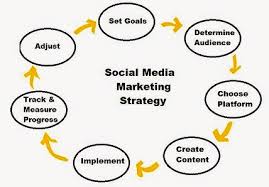
This is a seven step guide to creating a social media marketing strategy to reach more customers and drive greater on-line awareness for your brand or product. For a business to really capitalise from social media, it needs to build a clear strategy that takes into account what are the goals, what are you trying to achieve, who are the target customers are and what is the competition is doing.
Social media marketing can be defined as the use of blogs, articles and content marketing, white papers, video and images to share on social networks to raise awareness to pull in the web traffic and prospects
social-media-strategy

1st Step; Understand your social media goals
As with any planning in business, the first thing anyone needs to do when creating a social media marketing strategy is to understand what you want to get from it?. What are the goals (traffic, leads, likes, buyers, SEO) so you know the purpose of your social media efforts. For some businesses it is to do with creating or raising awareness of a brand or product. For some companies the focus will be on generating leads, increasing sales or driving website traffic. Larger companies many look to social media to build customer loyalty, increase community size or use as a communication channel. The key point here is the goal for your social media strategy has to go beyond simply gaining Facebook likes and Twitter followers.  The above examples are only a few areas a business could focus on, but depending on your resources a business should ideally focus on one primary or one secondary goal. Remember if you do not have goals, targets and measures of success then in all likelihood you are not going to accomplish any meaningful results from social media activity.
2nd Step; Create measurable targets and objectives
The second step is to now set clear targets and objectives based on the goals you have set. Remember the “S.M.A.R.T” method, so make sure your social media goals are Specific, Measurable, Attainable, Relevant and Time based.
Let us take the example of a business with a social media goal focused on increasing sales, then you might decide that the target is to generate an additional fifty on-line leads a month via landing pages, whitepaper or eBook downloads. If on the other hand, the goal set is to create brand awareness, then a target could the number of times your brand is mentioned on the social media networks per month. Also worth noting at this point, your goals, targets and objectives for social media should be directly tied to overall business goals, and they should be achievable. Goals without targets, actions and activities are just wishful thoughts. It is important to make sure the objectives are time limited. For example, you need to achieve a 100 percent growth in on-line leads generated within the next six months, not at some vague point in the future.
Now that you have set the targets and objectives you need to make sure you can measure them. There are lots of social media tools to track and analyse activity and quantify your progress. These tools like Klout, Google Analytic, TweetDeck, Buffer or Social Mention to name a few, can let you know when your progress plus they will also help you to identify any trends early and adjust your activities if you have to.
3rd Step; Customer targeting – who do you sell to
So now, the goals, targets and objectives have been set so now you know where you are going, so all set, right?, well no because you still do not know how you are going to get there. You see a successful social media strategy is all about customer targeting, reaching the right people with the right messages. To do this, a business needs to understand “who do you sell to”. For example, there is no point in targeting everyone who has an interest in sport if you really want to target only those who are cycling enthusiasts.
The best way to do this is to draw up a buyer profile. What does the profile of your ideal customer or buyer look like? Make it personal and give them a name. Where do they work? How old are they? What social networks are they likely to be on? What is their income? How often do they cycle (as in above example) Do they have children? What brands do they like or dislike? What motivates them? The list of detail goes on. If you find that you have more than one ideal customer or buyer profile then create a persona for each.
social-media-planning
4th Step; Monitor the competition
As social media activity is mostly transparent, monitoring your competitions activity will tell you a lot about what works and what does not. After all, you are all targeting the same customer set. By constantly monitoring the competition, you have a fantastic opportunity to learn from their activity and actions.
This fourth step involves researching your competitors, maybe select ones your own size, in similar locations and some of the big ones. Find out what social networks they are active on, study their content (articles, case studies, whitepapers, videos, promotions, links). Is it direct or educational? What kind of industry references do they use? Do they talk about their product, markets, industry or brand and what if any other things do they focus on (events, discounts, and webinars)? - read the full article here Social Media Marketing Strategy – The Bitter Business

Wednesday, 17 June 2015

Content Marketing Tips

Content Marketing is the key driver upon which most inbound marketing and social media marketing tactics are built. Content marketing not only impacts SEO, web traffic, leads and sales but also acts to influence buyers as they increasingly seek information before purchasing. Whether your business is B2C or B2B, the sharing of content (self-penned articles, general news articles, product, research and whitepapers) across social networks is now a must when it comes to promoting a product or service.
The tips below are designed to help drive traffic to a website and generate more leads or sales. Apart from writing your own content, to really maximise social media marketing you also need to source interesting facts, expert insights, statistics, and trends on your industry and then share them on a constant basis to produce dramatic results on SEO and traffic results.
content-marketing-plan
Step1. Tell and share great stories
Telling and sharing compelling stories is at the core of content marketing — tell the stories with images, videos and words. So step 1 is to focus on improving your ability to tell a story. Crafting words is at the heart of all storytelling; make the stories real, relevant, insightful, human and social to get people’s attention.  Writing like most skills will develop with practice, so persevere to improve. You can start with article research by doing some keyword searches while also looking at the most read articles on social networks. Try to make your articles longer than 1000 words to maximise SEO. Then you can post the articles on lots of free social networks (LinkedIn, Twitter, Tumblr, Plurk, Google+, Scoop.it, and Storify) to get buyers attention as well as gather some quality backlinks to your website.
Step2. Create memorable and optimised titles
A memorable title will get more readers while an optimised title will boost SEO. Just as the cover image can make or break sales on a new book the article title influences how many people will click to continue reading the rest of your article. So start with the end in mind and practice writing memorable titles that hits these 3 buttons – tempt the readers, drive engagement and optimised for searches.
Step3. To be seen, be consistent
In social media there is no such thing as a one hit wonder. Once step 1 and step 2 are in play, the key is to be seen and seen often. Sharing quality content (not just your own), images and video on a consistent basis are a recipe for success. Set up a blog posting schedule or social network sharing calendar that ensures you have a plan to stick to. A good guide is to publish a thousand word blog post per week and then do a few social media updates daily.
Continue reading the article here: Content Marketing Tips – The Bitter Business

Tuesday, 9 June 2015

Sales Effectiveness

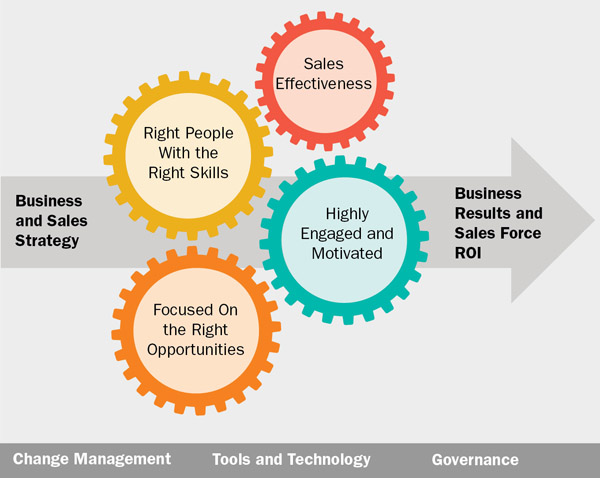
Sales leaders are always trying to balance between sales effectiveness and sales productivity. If a poll was conducted what would a CEO prefer, a productive sales force or an effective sales force? In my experience the most successful sales leaders and people care little about sales productivity.Anyone with even a few years experience in sales management will know that real sales people move to a different beat. They are a different animal, and not just because some of them like fast cars, expensive shirts or the latest Smartphone, no, the reality is real successful sales professionals are more goal focused than the average sales person. In fact the most successful sales people will constantly work more than 40 hours a week to make a sale or win a new customer to beat their target.
The measure of productivity is “the output of a worker divided by the time is required to achieve the output “, while a nice metric in sales it is not that really applicable in most sales organisations. I argue that sales people or a sales force cannot be measured in the same way as a factory worker, software developer or accountant.
Let me explain further, if for example, the IT department bring in a new system that reduces software coding time by 20% it takes a developer to code then it is reasonable to expect that the developer will produce an extra 20% more lines of code and the software teams output might go up proportionately.
When it comes to sales, when a tool is introduced that should save a sales person a few hours a week or measured as % of their working week – then it could be reasonable to think that they should be able to increase their sales by ten or twenty percent. But that is just not the case as has been proven by the mass adoption of CRM systems as real sales productivity has not improved.
Freeing Up Sales Peoples Time Does Not Increase Sales
sales-effectiveness
You see, unlike the IT and coder example if a company introduces a solution to help sales professionals do the dreaded monthly expense reports faster, what do you reckon the typical sales person will do with the extra time the business has saved him or her?
A poll of ten senior sales leaders I know gave the following quotes in reply to the above scenario – they will takes longer lunches – play more golf – spend more time at home – relax a little more. None mentioned they believed the sales force would improve productivity.
The reality is that the successful goal focused sales person is already working as many hours as it takes to nail or over achieve their targets. Saving them time simply makes them more “productive” as in they achieve the same sales output but in fewer hours. In management speak, the sales professional’s time spent working is flexible, meaning it is adjusted by the very productivity measures or tool companies have introduced to increase productivity. A zero sum result.
This is an excerpt from a Bitter Business article on sales at Sales Effectiveness is better than Sales Productivity – The Bitter Business

Friday, 5 June 2015

Sales Call Structure

In the digital sales world, the art of making a sales call has been overlooked, so today lots of sales people do not understand the nuances involved in making successful sales calls. Whether the sales call is cold, as a result of a web lead or inbound enquiry always approach the sales call with the same degree of attention to detail. I have put together a few tips to help remind sales people on how to master a sales conversation and turn those conversations into sales.
“Plan your work and work your plan”
Always Be Prepared to Succeed
sales-process
Before ever picking up the phone, go to the various social media sites and Google to get the insight on the company you are going to call, the same applies to the contact with whom you intend to speak with. Think about why are calling them, what is it in for them, what is your unique selling point for this prospect and what you want to achieve out of the conversation. Plan your opening statement and personalise your value proposition into a few sentences (why should they continue to listen to you!). It is also a good idea to craft a few different value propositions to appeal to people in different industries or situations.
Time the Run
The contact has answered the phone (make sure to use their name and your name and company on the intro). Try NOT to ask them whether now is a good time to talk as your sales call might be heading to the exit door marked “call back” and in the process, you may be forced to end the call, missing the opportunity to talk with the contact but most of all missing the chance to get them to listen about a solution that could help them. (If you don’t believe your solution can solve an identified problem then don’t bother calling)
Why not try a simple opening such as “How are you today?” This can provide the type of feedback you might only discover through body language. Now listen to the contact’s tone of voice to determine whether they are in an engaging mood or sound distracted. The key is to quickly determine whether to reschedule the call, adjust the sales pitch (length) or proceed as initially planned.
Master the Delivery
It is what you say and HOW you say it. As the contact cannot see you, your voice and the quality of the information you impart is what is going to keep this call going. Always have a friendly tone, speak clearly and use voice inflection to get attention. Talk at a measured pace, be concise , let your words flow naturally and use some facts with a raised pitch showing confidence so you can move to the next step with the contacts approval (this does not mean asking them, you presume and move seamlessly to next step). Have you brand or company sales pitch down pat, always be ready to answer “What do you offer different from my current supplier?
A training tip if you do not feel comfortable with the delivery is to practice and record some trial calls or ask a buddy or ask a sales trainer to score you. When you listen back to the phone recording, pay attention that your voice sounded confidence and the words flowed like a natural conversation.
Read the full article and other articles on sales here Sales Call Structure – Sell Successfully 

Monday, 25 May 2015

Social Selling Tips – The Bitter Business

The sales and marketing buzzword word at the moment is “Social Selling”; where the sales process is now tapping into social media conversations and the impact of social networks in driving brand awareness or buyer consideration.  Most sales and marketing leaders would concur that the sales process has completely changed. Sales people need to adjust their skill set as tactics like cold calling has a low return for allot of effort so learning how to harnessing the power of selling via social media is important.
A social selling strategy should be about a genuine effort to share value and content prior to engaging in any sales conversations.  Social selling is not SPAM, too often the simplistic approach is for sales people to spam sales messages on Twitter, Facebook, on LinkedIn groups, or to a new connection  with a vanilla flavoured sales message and a self serving web link.  If you do this stop, as the moment anyone gets these messages, the brand loyalty and any trust gets flushed away. Connecting and building your social network just to SPAM them is NOT social selling.
The biggest social selling tip is to truly build value over time with your social network by sharing content that people find useful and helpful. In time when you personally message to a social tie to engage in a sales discussion your chances of a positive response will be greatly improved.
So a great social selling tip that will benefit all social marketers, sales people and businesses is to take the time every single day to do the following.  Connect to your social network community with news, images, videos, snippets of information. Another tip is to find ways to connect your network together (as this provides value) and offering to help others connect.  Pause a minute and think about this scenario. You see a message posted on LinkedIn that says, “Where could I find some inspiration for a presentation?”  Instead of posting of reply such as, I would be interested in this myself or have you tried PowerPoint? (True reply!).  Why not see if anyone in your network is a presentation expert or does allot of presentations that you could offer to put in touch with your connection that is looking for some presentation inspiration.  Act as a conduit, a connector who brings value by taking the time to listen and connect your social ties
social-selling-tips
Social Selling Steps. 
Step 1. Listen to and monitor social media conversations across several social networks to get a comprehensive view of what’s being said about your specific focus
Step 2. Start to identify interests, most liked news, influencers and prospects through the listening process
Step 3. Track your prospects. Review their posts, timelines and understand what they are interested in or saying.
Step 4. Share quality content (not just your own). Seek out some information of mutual interest, and then share. The information must be professional and relevant to them. You can also like or even re-tweet their content.
Step 5. Position yourself as an expert by sharing real insights and proven research you have gained in the industry or with working with customers
Step 6. Gradually become a valuable connection, one worth listening to. Once you have established yourself as a valuable connection, you can nurture and build a buyer/supplier relationship far more quickly.
These steps are the foundations of social selling, and too many marketing and sales  people forget that selling is all about firstly building relationships and secondly providing value.  Start now to implement these social selling steps and you will have set yourself to gradually drive more sales then cold calling can ever do.
Another social selling tip is to remember that selling is inherently social so social selling is nothing new. Rather look at social selling as a sales tool to help you sell more effectively that will evolve over time.
social-selling-tip
Continue reading here: Social Selling Tips – The Bitter Business

Friday, 22 May 2015

Managing a Startup Business – The Bitter Business

Starting a business, any business is a brave step. But how do you manage a start-up business as well as find customers or put in place a customer acquisition strategy on tight or even zero budgets. Working with early stage and start-up companies I know first-hand how limited resources can be. The tendency for many small businesses is to focus on the product. They add in more and more features or take comfort in a well designed website or just even they talk about strategy rather than putting in place a plan to find and sell to customers so the business can getting on track to achieving  business success AKA revenue generation. The below list is some actionable business tactics to get your small business sales pipeline moving and put you on the track to success.
business-startup
Know your Target market – don’t try to sell to everyone
Product to marketing fit is critical to any business success however a business start-up should never try to be a great product to satisfy all buyers’ needs, this will simply not work as no one product will be for everyone. So step 1 is to try to focus in on one customer target group. It will make the business look more focused, knowledgeable, and professional plus it allows the business to channel its efforts into making one target group happy. The key now is to do a customer targeting exercise (figuring out who your customers are and what they want). I am not saying this is easy, especially if your business is new or you only have 1 or 2 beta customers. Brainstorm on what set of buyers or people who might need your product now by matching it back to what problem your product solves, this is sometimes called your USP- unique selling point or Value Wedge. Also check if it is a fluid market (low hanging fruit to be gathered) by doing some Google searches on related keywords. Balance the fact that you don’t want to define your target market so small or so tightly that it’s something people won’t search for. Think in terms of keywords, search terms or existing topics being discussed on forums or industry buzz.
Continue reading the full article here: Managing a Startup Business – The Bitter Business

Tuesday, 19 May 2015

LinkedIn for Lead Generation – The Bitter Business

LinkedIn can be a powerful sales tool when used as part of lead generation and networking activities. As social selling and reaching social influencers becomes ever more important in raising awareness of a company, brand, product or service it is important to use LinkedIn effectively.
LinkedIn-lead-generation
However, before any lead generation can happen, it is important to build up your network and influence across the social groups on LinkedIn.  Every business, marketing and sales person should focus on 3 key actions.
  1. Give to receive: Share quality, relevant content and news from multiple sources.
  2. Behaviour: Buyers are well informed and knowledgeable so be genuine and insightful.
  3. Connecting: Invest time connecting to people you know plus customers, influencers etc.
Here is some pointers to maximize LinkedIn for lead generation:
Tip 1. Profile: Yes, it seems obvious that you need a profile but the point is you need a full profile (photo, career, articles, social pitch) that will support the lead generation activities, not just any profile mashed together.
Tip 2. Think of your profile as a commercial that clearly spells out “what you do”. So make sure you complete the entire profile (also state that you are open to connecting with people), you could also import your resume or CV.
Tip 3. Make sure maximize the section below your name by using keywords. Select keywords that promote your products or services. If a potential buyer is searching for someone to do “sales and marketing” they are more likely to find you than if you list your company name.
Tip 4. Spend time completing your work history, summary and employment sections (again using active keywords), highlight any accomplishments or achievements. This builds trust within the LinkedIn community.
Tip 5. On-line users can be very visual, so try to include Slideshare content, presentations or videos on your profile and not forgetting any articles you published on LinkedIn pulse. This builds authority.
Tip 6. Unless you are a major social influencer, it is best to keep your LinkedIn profile pretty open as you are using LinkedIn for lead generation, so the easier it is for “social ties” to connect with you, the better. This builds connections to business people and weaker social ties.
Build Relationships Steadily
The whole premises of using LinkedIn is to build  relationships with business colleagues, potential buyers, existing customers, business people you know and to build connections with weak ties via group participation
LinkedIn suggest this 5 step process for building effective relationships based on social media best practices:
Continue reading the full article here: LinkedIn for Lead Generation – The Bitter Business