Showing posts with label inbound marketing. Show all posts

Thursday, 2 February 2017

B2B Marketing Strategies – The Bitter Business

B2B Marketing Strategies – The Bitter Business


In the world of B2B marketing strategies, CMO’s and marketing leads are finding out that there is allot more to them than just content and SEO.
Social media marketing companies seem to trot out the well worn lines of, you must create a library full of content, recalibrate your SEO, share the content on the social networks, and HEY PRESTO. Your business will have a flow of low cost inbound leads from buyers interested in buying your product or service. The logic around a content lead strategy for lots of businesses stacks up as the lower cost of an inbound lead against an outbound lead is sizeable, making it attractive to invest in SEO, articles, blogging and content.
b2b-marketing
So it can be easy for any marketer to assume that we all use social media. Most marketing people are active on the social networks as it forms part of marketing tactics and we also have to be up-to-date on latest trends. However, this is not the case for lots of senior business people and buyers. I have worked with lots of CEO’s who do not have profiles on LinkedIn or Twitter. Others in senior positions are not actively engaged with social media to get a result on trying to build awareness for your brand or even social selling tactics.
What lots of social media agencies will never tell you is that an inbound strategy does not work for all market sectors and can be in fact a waste of money, resources and time. For certain B2B companies operating in certain markets or industries, the reality is the target buyer audience can be too small or the products or services too specialised to be worth over investing in SEO, Google Adwords or Content Marketing. If your business is a new or disruptive product then maybe buyers is not yet doing keyword searches on Google for the solutions you sell.
You see most inbound marketing tactics try to hit multiple keywords or topics to engage buyers. Most of these tactics really are inexpensive to tee up and implement but the audience engagement is not an exact science (you can’t stop anyone reading your articles). So it does take some time to refine your tactics to narrow down sell-to leads.
When articles or blog posts are ranked in search engine results, the relevancy to the topic is mainly down to the keywords it has been optimised for. If your target is HR directors in the banking industry in Ireland then content and even paid advertising cannot be specifically targeted at them(you cannot control who reads or clicks). There are exceptions like social selling tools like LinkedIn or Connectors Marketplace where you can specify buyer profiles.
Let me be clear, I am not for one second suggesting B2B marketers should discount social media as part of their marketing strategy. The thing to remember is to keep the purpose and goals in perspective, don’t get carried away by stories, statistics and advice that may or may not be relevant to your business proposition.
To make social media pay, you should:
• Evaluate the social platforms for their fit to your marketing goals
• Can you feed them with quality content and informative articles
• Train up the sales team in social selling so they can use social media to nurture relationships

So when does inbound marketing have limited returns?

  • The buyer is a specific person within that company: If one buyer has the authority to purchase your product with little influence from other stakeholders as it is not a critical purchasing decision (e.g. paper) then it is a challenge to engage this person with inbound marketing alone.
  • The target market is small: When the target prospects are defined by location, company size or a single buyer (see above) in a company, the list of prospects can be very small. My own rule of thumb is if your prospect list is less than 1000 companies then a heavily weighted inbound strategy may only be helpful to raise awareness as the buyer will probably be targeted via sales calls.
  • Disruptive technology or products: Where inbound excels is when the buyer is on a journey of self discovery (reading articles, whitepapers or engaged with social conversations) and where they understand the problem and the solutions. When a product is disruptive in nature a business may have to create demand as few buyers will be seeking out information. Inbound marketing does NOT create demand, it harvest levels of buyer interest based on keyword nets thrown out by marketing content.
The reality is that for some companies, the keyword net on Google searches and the social networks is simply too small to gather enough sales leads. This leaves options like outbound sales and referrals to harvest leads. We know referrals have a high conversion rate but this is not a repeatable sales process. So this leaves outbound selling (combined with social selling) makes for a repeatable, scalable sales process.
As someone who champions inbound marketing, social selling and good old fashioned sales techniques, I have to be frank and say if your products or services meet any of the criteria I wrote about above, then inbound marketing alone as a lead channel will have limited success. So contrary to what lots of social media gurus preach, inbound marketing is only part of the solution and it may not be a lead generation machine to feed sales.
b2b-marketing-strategy-options

So what marketing and sales strategies will work?

Marketing and sales leaders spend endless hours asking and answering this very question, “Where and how do we engage the right prospects?” The good news is there are still lots of options when it comes to reaching B2B prospects.
Embrace outbound prospecting: Hire in sales people who can pick up the phone and prospect AKA cold call. A business can now subscribe to automated lead generation platforms to give you large lists of prospects based on titles, industry and location with full contact details (email and telephone numbers) including social media profiles for social selling engagement. This works great for SaaS companies and companies with defined sales processes.
Still some life in events and trade shows: Attending events can be another way to connect with your target prospects and meet them in face-to-face. This can be a very personal approach that creates trust and builds relationships. The big barrier  is that events cost money, have higher cost per lead, take time to plan and are they cannot scale in any major way.
Industry Webinars: If your own marketing reach is too small to make hosting your own webinar an option, then maybe consider trying to find a market research company, an industry publication or forum or a contact where you can piggy bank on their webinars to get access to their audience. It does take effort but can be a great way to grow a prospect list while providing valuable content to generate more awareness.
Customer Referrals: Some businesses do manage to generate a large portion of their leads via customer referrals and word of mouth. But a note of caution, this tactic is difficult to forecast and scale. Also from a sales process, it is hard to have a programmatic approach to word of mouth referrals. Even formal referral programs usually have low level of leads in certain B2B sectors.
Exposure in publications: Online and print publications are a B2B marketing channel worth exploring. Product reviews, news and interviews can be a great way to reach an audience and connect with prospects
We must all accept that the buyer’s journey is changing. Yes, social media marketing agencies are right when they say business buyers are increasingly relying on social media, social conversations, social reviews and other content as a means of gathering information about vendor solutions. But regardless of what B2B marketing strategy you pursue to generate leads or sales, there is still a huge place for direct human contact via well trained sales people. In the sales process there will always be a place where questions will best be addressed in a personal way especially in higher value deal sizes.

Tuesday, 8 March 2016

Inbound Marketing Guide – The Bitter Business

Inbound Marketing Guide – The Bitter Business


There is allot of talk around “inbound marketing” and as a guide to what it means to a business. Social media marketing agencies and practitioners seem to have developed a language of their own as digital marketing has become the dominant channel. Terms such as marketing automation, marketing qualified leads, social selling and lead nurturing are now common place words in the quest for business to find more customers. Here we will try to help you understand some of this vocabulary.
inbound-marketing-guide
To start with, most inbound marketing plans would focus on five key stages
Attracting visitors/web traffic to a site,
Converting visitors to leads,
Convert those leads to paying customers,
Turn the customers into repeat purchasers,
Analyse KPI’s and metrics to improve results,
Some reasons that have boosted inbound as a marketing tactic would include the fact that companies with a content driven strategy have 50% more website visitors than those that don’t and

leads captured from inbound marketing cost 60% less traditional forms of lead generation.

The reality is that an inbound marketing strategy has more or less the same goals as outbound marketing so the difference between them is not what any company wants from the marketing effort but how it goes about getting it. Inbound marketing is focused on attracting IN buyers to consider a brand usually with content as the bait (articles, videos, images, whitepapers etc) while outbound marketing employs diversion tactics (online ads, direct mail, cold calling) to get buyers attention. Most businesses would use a mixture of inbound and outbound marketing. A worrying trend is that some effective outbound activities like prospecting and lead generation via sales people is becoming dormant as too many start-ups or small businesses rely exclusively on inbound marketing to deliver leads and sales.
For a whole host of reasons, inbound marketing is now the primary channel deployed to engage buyers when considering a purchase due to the more non-interruption nature of inbound marketing.
Below are a list of activities and terms relating to inbound marketing, so next time a social media marketing agency speaks about how to put in place a plan then you will be well prepared to talk about it. While content is the rock upon which inbound marketing is built there is more to this strategy than articles, it also includes the use of social selling, targeting long tail keywords, interest sharing, engaging in social network conversations, attracting social media influencers and managing multi platform social channels.
marketing-strategy-options
So here are some inbound buzzwords to improve your marketing speak.
 Inbound Marketing Plan;
The inbound marketing plan is basically a publishing calendar of activities including goals and targets covering blogging, content themes, articles, and whitepapers, landing pages, social networks engagement, social selling, lead generation, traffic and engagement in social media conversations.
Growth Hacking;
A recent term added to the marketing vocabulary. Mainly a tactic employed by start-ups in the App or SaaS space, growth hacking works on out of the box thinking blended with technology to try to achieve massive growth in numbers in a short pace of time. The sole focus of using this as a strategy is to grow big (web traffic, social media followers etc but not revenue) quick so every action is designed to drive that growth.
Viral Marketing;
This is about taking a marketing campaign, seeding it to other people and hoping the content appeals on a large enough scale to make the campaign grow rapidly. It is the multi level marketing of the digital age. Think “Ice Bucket Challenge”. Lots of marketing people go to bed at night dreaming about their image, video or article going viral. However the reality is there is little control when it comes to what will go viral. To try and make viral marketing work the key is to create some unusual content that will get lots of people to promote it for you. The more people who share your content will lead to increased brand exposure. It boils down to encouraging people to plug you to their social media audiences.
A/B Testing;
This refers to the testing of two different versions of the same email template, landing page or call to action (CTA) to figure out which version delivers the best results. A/B testing is something all marketers should do. Examples would be to take a call to action and test it with different strap lines, colours, text, and or with a different image. This allows you to determine which call to action performed better. So don’t guess as different messaging works to different audiences and even geo-locations. Always be testing as even a small percentage increase in leads or traffic can have a huge impact on sales (depending on your average order value).
Content Marketing;
Content marketing is the seed that will grow to capture future opportunities for web traffic, leads and customers. It is the bedrock upon which inbound marketing was formed and still powers. It involves the creating and distribution of valuable, relevant content on a consistent basis (daily, weekly) to attract buyers with the goal of getting the customer to take some predetermined actions. The content created is heavily keyword/SEO orientated the majority of time for a start-up and a high percentage of the time for companies with larger databases.
inbound-marketing-terms
Marketing Automation;
 Marketing automation is software that is used to automate large parts of the marketing process like lead nurturing, content publishing to social media or auto-responder emails. This software usually appeals to mid-sized upwards companies with larger databases or well trafficked sites.  Marketing automation is mostly used to improve the nurturing, conversion and closing stages of the sales funnel and is not a one fit fits all solution. The hard work of getting traffic and creating content is still yours to complete.
Social Selling;
Social selling is a great inbound tactic, despite its name it is not focused on sales but rather selling oneself or a brand to raise awareness to buyers of what you offer. It is a subtle and patient tactic where time is spent building up trust or “emotional lodgements”. It works on the premise that social media accounts are a fantastic broadcast channel while also a place to gradually build relationships and make connections. The key is to share content from other sources (not just your own), like other articles, participate in social conversations and provide regular updates. Social selling can be used as the key to unlock sales calls if used correctly, otherwise you are seen as a smash and grab merchant.
Lead Nurturing;
This is the marketing or sales process that is set in motion after someone downloads or fills in a form (newsletter, white paper) on your website. In the B2B sales environment it could be a series of emails together will social selling and direct sales contract. In B2C it usually involves a series of emails. The skill here is that when someone downloads a piece of content from your site, you ask (and give reasons) for them to provide their email address. Now with the verified and opted-in email address, you can implement a series of emails to be sent to them in the next days, week or month after they first signed up to downloaded something. Lead nurturing is important as it reduces your cost of customer acquisition and allows you to build a relationship as you know what they are interested in from your offerings. Be careful not to over expect the speed of developing the relationship or put too much urgency into the nurturing as their initial sign-up could only be a top of the funnel action.
Long Tail Keywords;
This term usually applies to your content marketing efforts and is the SEO keywords you have selected to target. These keywords are normally three plus words such as “social media marketing in Ireland” and are not as competitive in Google as a one word keyword such as “marketing.” Google also auto suggests long tail keywords so research these as part of your content strategy. Can I target hot or one word keyword, you ask? Sure as lots of people are probably searching on that word daily but on the flipside your competitors are targeting these keywords too. It could take years to even get on page 5 of Google for a heavily trafficked keyword. Ten or twenty well indexed long tail keywords when combined will deliver just as much traffic in the medium term as a single keyword. So when creating content titles and web URL’s, choose longer, more detailed keywords. If you research your buyer profiles well enough you will get clicks and views from potential buyers from your target market faster than you think.
The above is not a complete list of phrases as new words and terms come into play all the time around inbound marketing but hopefully by the time you have read this article, some of them are still relevant. Thanks for reading.

Thursday, 3 March 2016

Inbound Marketing Agency for Ireland – The Bitter Business

Inbound Marketing Agency for Ireland – The Bitter Business


The Bitter Business is an experienced business partner providing cost effect digital marketing,sales, social selling and content marketing solutions to a broad range of companies in Ireland. A broadpool of skills practised over 30 years allows us to offer tailored inbound marketing services to generate leads, boost traffic, target selected keywords for SEO and reduce the cost of customer acquisition.
We believe the success at inbound is about driving awareness to the right audience, getting them to consider your company with quality original content, converting interest into qualified leads and then nurturing them through the sales process. Our mission is to increase your marketing ROI, lower customer acquisition costs and grow your revenue.

inbound-marketing

We help sales and marketing to generate more leads and deliver real results


digital-marketing
We have experience with working with a wide range of companies – from technology to catering and with start-ups. As business owners we understand all too well the challenges entrepreneurs face in acquiring new customers, generating revenue and in growing their business. With over 30 years corporate and small business experience we understand how business models work, be able to quickly identify growth drivers and grasp challenges. We know that what our clients want is to use marketing to drive sales.
So when it comes to cutting through to clutter to accelerate sales and marketing tactics, you will not need to spend endless hours educating us on what needs to be done. It is about being accountable for targets and results at a fair price. We are here and ready to go.

FREE Consultation

FREE 1 hour – no obligation – inbound marketing to social selling and social media consultation for your business!

Monday, 8 February 2016

Brian OConnell - Tweak Your Biz

Brian OConnell - Tweak Your Biz


Brian O’Connell is based in Dublin, Ireland, Working as a hands on business enabler with senior sales and marketing manager experience in companies like Dell, Oracle, Apple and J2 Global. He has worked with or founded companies indigital media, productivity software, social media software, educational software, business software and SaaS business models. Now focused as a business enabler or growth hacker to growth orientated companies.


Posts by brianoconnell1:


The Ultimate Inbound Marketing Guide for Business

There is more to inbound marketing than publishing content. This ultimate inbound marketing guide takes you through the steps.

Wednesday, 16 September 2015

Marketing Companies in Dublin Guide – The Bitter Business

Marketing companies in Dublin or anywhere in Ireland offer a menu of services from digital marketing,SEO, social selling, content marketing to social media strategy. This guide is aimed at the business owner to ask what skills do they expect to see before deciding to working with one of the many marketing companies in Dublin or anywhere.
Social networks and the rise of social selling has changed the marketing game completely for business’s. Business has become smarter,faster, cheaper  with slower and expensive business models struggling. The lines dividing sales, marketing, advertising and public relations have disappeared with sales people needing to be able market and marketing people needing to sell.
Before engaging with a marketing company, when it comes to digital marketing there are some amazing do-it-yourself marketing tools that entrepreneurs or small business can use if they so choose. However, to successfully execute a social media marketing strategy or to implement a content marketing lead social selling strategy a business just may need some help. But they most likely will not need help from a bloated marketing agency still using old-school tactics.
digital-marketing

A Guide to engaging with the marketing companies.

Partnership not an Outsourcing Relationship.
There are lots of agencies and marketing consultants offering social media and digital marketing services. But does the potential client know exactly is being offered and what should be offered based on the needs of the business?
Will the agency assist with quality content creation? Can an agency source relevant articles and other content for the business segment to share on LinkedIn, Twitter, Facebook, etc? (this is at the heart of social selling). Can an agency suggest social influencers or people to follow? Can an agency set up a tweeting plan? Does the agency know when/how to post content on the social networks? Can they recommend blogs and forums the business should be participating in/on?
marketing-strategy
Continue reading the original article here.

Marketing Companies in Dublin Guide – The Bitter Business

Wednesday, 24 June 2015

Social Media Marketing Strategy – The Bitter Business

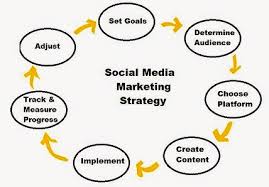
This is a seven step guide to creating a social media marketing strategy to reach more customers and drive greater on-line awareness for your brand or product. For a business to really capitalise from social media, it needs to build a clear strategy that takes into account what are the goals, what are you trying to achieve, who are the target customers are and what is the competition is doing.
Social media marketing can be defined as the use of blogs, articles and content marketing, white papers, video and images to share on social networks to raise awareness to pull in the web traffic and prospects
social-media-strategy

1st Step; Understand your social media goals
As with any planning in business, the first thing anyone needs to do when creating a social media marketing strategy is to understand what you want to get from it?. What are the goals (traffic, leads, likes, buyers, SEO) so you know the purpose of your social media efforts. For some businesses it is to do with creating or raising awareness of a brand or product. For some companies the focus will be on generating leads, increasing sales or driving website traffic. Larger companies many look to social media to build customer loyalty, increase community size or use as a communication channel. The key point here is the goal for your social media strategy has to go beyond simply gaining Facebook likes and Twitter followers.  The above examples are only a few areas a business could focus on, but depending on your resources a business should ideally focus on one primary or one secondary goal. Remember if you do not have goals, targets and measures of success then in all likelihood you are not going to accomplish any meaningful results from social media activity.
2nd Step; Create measurable targets and objectives
The second step is to now set clear targets and objectives based on the goals you have set. Remember the “S.M.A.R.T” method, so make sure your social media goals are Specific, Measurable, Attainable, Relevant and Time based.
Let us take the example of a business with a social media goal focused on increasing sales, then you might decide that the target is to generate an additional fifty on-line leads a month via landing pages, whitepaper or eBook downloads. If on the other hand, the goal set is to create brand awareness, then a target could the number of times your brand is mentioned on the social media networks per month. Also worth noting at this point, your goals, targets and objectives for social media should be directly tied to overall business goals, and they should be achievable. Goals without targets, actions and activities are just wishful thoughts. It is important to make sure the objectives are time limited. For example, you need to achieve a 100 percent growth in on-line leads generated within the next six months, not at some vague point in the future.
Now that you have set the targets and objectives you need to make sure you can measure them. There are lots of social media tools to track and analyse activity and quantify your progress. These tools like Klout, Google Analytic, TweetDeck, Buffer or Social Mention to name a few, can let you know when your progress plus they will also help you to identify any trends early and adjust your activities if you have to.
3rd Step; Customer targeting – who do you sell to
So now, the goals, targets and objectives have been set so now you know where you are going, so all set, right?, well no because you still do not know how you are going to get there. You see a successful social media strategy is all about customer targeting, reaching the right people with the right messages. To do this, a business needs to understand “who do you sell to”. For example, there is no point in targeting everyone who has an interest in sport if you really want to target only those who are cycling enthusiasts.
The best way to do this is to draw up a buyer profile. What does the profile of your ideal customer or buyer look like? Make it personal and give them a name. Where do they work? How old are they? What social networks are they likely to be on? What is their income? How often do they cycle (as in above example) Do they have children? What brands do they like or dislike? What motivates them? The list of detail goes on. If you find that you have more than one ideal customer or buyer profile then create a persona for each.
social-media-planning
4th Step; Monitor the competition
As social media activity is mostly transparent, monitoring your competitions activity will tell you a lot about what works and what does not. After all, you are all targeting the same customer set. By constantly monitoring the competition, you have a fantastic opportunity to learn from their activity and actions.
This fourth step involves researching your competitors, maybe select ones your own size, in similar locations and some of the big ones. Find out what social networks they are active on, study their content (articles, case studies, whitepapers, videos, promotions, links). Is it direct or educational? What kind of industry references do they use? Do they talk about their product, markets, industry or brand and what if any other things do they focus on (events, discounts, and webinars)? - read the full article here Social Media Marketing Strategy – The Bitter Business

Monday, 27 April 2015

Social Media Marketing Plan – The Bitter Business

A social media marketing plan should not pose any major challenges to a small business. As in any growing business with a great product or service, the marketing team or person is most likely to be working on different tasks at different times and these tasks can change rapidly depending on the business needs. However, even with taking this into consideration, social media is now so vital to business success there are some tasks that need to be planned as part of the daily marketing routine.
social-media-infographic
Set the social media goals and objectives.
Every article, news release, research or whitepaper are assets in a social media strategy to serve the goals that have been set. As with any business strategy you must know what you are working toward. Is it drive brand awareness, customer acquisition, generate new sales drive traffic, build up your network, reduce the cost per lead. Whatever of any or all of these you need goals and associated objectives clearly defined.
Work on the content strategy
When it comes to marketing the product or service, social media marketing success depends on the content strategy a business decides upon. Prior to writing, commissioning or publishing any content, a business needs to understand, what audience(s) are going to be  targeted?, What type of voice (expert, commentator, industry) will you use to communicate? Who are you trying to influence? What specifically do you want to achieve (leads, likes, traffic, views or authority)?  Allot of strategy answers are to be found in questioning the content strategy so everyone involved in the marketing and sales efforts need to know the why, what and who, understand it and is always in their minds. Content marketing strategy can then be tweaked and optimised as necessary.
Make sure there is new quality content to post
Fresh, quality, informative and relevant content is at the core of every social media campaign to reach target audiences and ensure engagement. To be seen as an influencer and sector expert it is vital to share new content consistently and regularly. New content when well written (not self- promotional or product articles) and engaging can propel a business forward. This is why the person in charge of the social media plan needs to make sure there is always some new content ready to be shared. There is no hiding the fact that writing content does take time and continuous effort so it needs to be planned.
Set up a content sharing schedule
The social media plan needs to have a schedule when content will be shared so all social marketing activities tie back into other marketing events or business plans. Also a schedule will take account for any external events, key word targeting, launches, promotions or seasonal trends that impacts your industry. This is why the content sharing calendar is so important for deciding what social media activities are in the pipeline. While not all content can be created and planned for weeks in advance of sharing, the core, and keyword targeted content pieces that demand more care and effort should be.


Social Media Marketing Plan – The Bitter Business

Wednesday, 8 April 2015

Inbound Marketing Strategy – The Bitter Business

Every business today needs an inbound marketing strategy. In the digital world nearly all marketing efforts are focused on actions like growing web traffic, increasing visitors, gathering sales leads, driving up conversions and securing buyers and customers.   Inbound marketing strategies deliver on all the same marketing goals but in a different way. Traditional marketing or push marketing  is really about interrupting buyers, trying to get their attention with TV or radio ads, online advertising, cold calling, direct mail to name a few.  Whereas inbound marketing is focused on “pull marketing”, devising marketing tactics to get buyers permission to share information as to add value to the buyers journey when researching products or services.
Every business will most likely use a blend of inbound and outbound marketing tactics to deliver the targets. Every marketing focused company including marketing automation companies like Hubspot, Marketo, Oracle and SAP all use both outbound and inbound marketing tactics. Indeed  outbound marketing activities like cold calling and lead generation by sales teams is nearly a forgotten weapon in customer acquisition as too many companies (especially newer technology focused companies) rely too heavily on inbound marketing to drive the sales pipeline.
inbound-marketing-strategy
As a percentage of traffic and sales leads, inbound marketing is now the main driver in getting a brand into the buyer’s awareness and consideration steps when looking for a product mainly due to the non-interruption aspect of inbound marketing efforts.
Listed below are some inbound marketing tips to compliment the marketing strategy in pulling in buyers to a business. The golden rule of inbound marketing including social selling is that is it about sharing not selling, help not hype.  A business of any size can deploy inbound marketing with some good content and a few whitepapers to start but be aware that inbound marketing will take time to take hold however once traction starts happening , inbound marketing will deliver better qualified and less expensive sources of sales than outbound marketing.I

nbound Marketing Strategy – The Bitter Business

Monday, 30 March 2015

The Ultimate Inbound Marketing Guide for Business

Inbound marketing article for business, published on TweakYourBiz by Brian O'Connell.
Inbound marketing has become the main driver in getting a business into buyers awareness and consideration steps when looking for a product mainly due to the non-interruption aspect of inbound marketing.
The Ultimate Inbound Marketing Guide for Business
Here are eleven tips in using inbound marketing to attract people to a business; inbound marketing is more about sharing than selling, helping not hyping.  The great thing about inbound marketing is that it works so well for any business regardless of size in any market.  A word of caution is inbound marketing does take a bit of time to get going, however, once the results start happening they are better qualified and less expensive than harder outbound tactics.
The foundation stone of inbound marketing is “Content” and publishing quality content alone will go a long way to increase traffic and leads for a business or website.  But there is more to inbound marketing than publishing content; inbound marketing also includes social selling, article sharing, social networks conversations, social media influencers, article seeding, forum participation and chat.
So follow these inbound marketing tips to improve your Inbound Marketing results
The full article can be read at this link The Ultimate Inbound Marketing Guide for Business - Tweak Your Biz