Showing posts with label lead generation. Show all posts

Tuesday, 16 January 2018

Sales Prospecting

Sales prospecting is not an easy sales activity. It is a sales technique that requires training and constant attention to the latest developments in prospect engagement or lead generation tactics. Sales prospecting is a critical aspect of the sales process as the biggest challenge in sales is getting an opportunity started in the first place.

sales-prospecting

Sales Prospecting Should Match the Buyers Journey

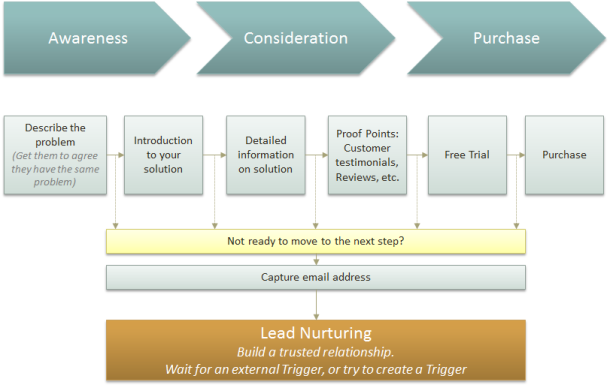
Nearly all buyers go through a number of stages on their buyer’s journey. Along the way they will make decisions on the importance level of solving the pain point, they will evaluate the available solutions plus assess vendors who they feel can suitable. In the early to middles stages of the buyer’s journey, sales prospecting is about bringing clarity and communicating a value proposition to the prospect. A potential customer will also need to be convinced of how familiar they believe a salesperson is with their business needs. The outcome of a prospects decision or considerations can be linked back to how well a salesperson has built trust and confidence through the various sales prospecting interactions.
Successful sales prospecting ensures that all interactions and sales communication are geared towards creating specific outcomes, not for the salesperson but for the potential customer. A focus that outlines how the company can make the prospects life easier, their jobs more rewarding and outcomes that simplifies their buyers journey.
Sales Prospecting Tips

  1. Selecting target prospects to engage.
Use ideal customer profiles to map the buyers journey. Before a salesperson reaches out via social selling, cold email or phone call they need to be able to answer “why are they on the list of prospects”. What information, signals or insights would make them a potential customer?
Sales prospecting where salespeople have to find or create opportunities is not easy. It involves quite a bit of effort to establish credibility and to get the prospect to listen to what the salesperson has to offer. Sales prospecting has to be a planned, organized activity as random prospecting is mainly a waste of time. Core to every good salesperson sales prospecting activities, is the importance of understanding the company’s needs, as well as the prospects desired outcome they will get by using the proposed product or solution. Using LinkedIn, Google search, Forums and Business directories are the most effective and efficient way to find quality prospects that match a company’s ideal customer profiles.

  1. Create a Strong Value Proposition.
Never forget that a prospect only cares about their problems, their challenges and their pain points. They are not looking for a nine-inch drill, they are looking for a nine-inch hole. They want to listen to salespeople who make sense, who create value, who are credible and who will make their lives easier, this includes helping them through the stages on the buyer’s journey. Prospects don’t want to listen to product pitches. A prospect wants to hear solutions to their pains and problems, evidence that others have experienced this and got a resolution. They don’t need more vanilla flavoured sales messages. They want a value proposition that will make it worthwhile their time listening to a salesperson. They want insights, they want to see the end result (without the sales pitch) from the earliest step in the buying process.
So, create a strong value proposition and ask “Will it get a prospect to listen?”

  1. Social Media is a Key Activity in Sales Prospecting.
Social media is playing an increasingly bigger part in purchasing decisions and B2B buyers are being influenced more and more by social media. Within the next decade, the majority of B2B buyers will be digital native. Social media will be their go to channel to research, connect, reference and to educate. Social media not only gives salespeople access to buyer profiles, but rich data such as background history, connections, similarities, likes, interests and deep insights into the company. Social listening can throw up signals about the prospects needs, trends in their market or challenges within their industry. All this data can be used in prospecting research and in the creation of a value proposition for a specific market.
Also, social selling along with the growth of inbound lead generation have surpassed the older, more traditional forms of sales prospecting. Whatever other sales prospecting tactics a salesperson uses, the use of social media and social selling has to be on their list.

  1. Learn to use Sales Tools and share Content.
Potential customers value content that helps educate and fill in some blanks for them. As more and more selling will be conducted via the digital channels, sales teams need to up-skill on the use of sales tools and content (articles, whitepapers, research etc) to engage a prospect. Content that supports sales prospecting activity must be based on fulfilling the customers’ needs and requirements. The goal is that they build a trusted connection with the salesperson via their interactions. Buyers are drawn to thought leaders and surveys show they prefer interaction with salespeople whom they consider to be a trusted adviser.
Many companies are now prioritising the education of their target audience through the creation of deep and insightful content assets that makes buying easier, and they are doing this with a customer first approach.
Sales tools such as video, ROI calculators, AI, scenario planning, live webinars, messaging channels and virtual tours will continue to grow.

Sales prospecting prioritises building longer term relationships

Always take into account that at any time, just 3% of your target market are actively seeking to purchase with approx. another 6 to 7 percent in the consideration stage. This leaves a whopping 90% of an addressable market that is in “the status quo position”. The fact is that while a prospect may have pain points, no salesperson has made them critical enough that a buyer wants to prioritize a solution.
Salespeople can get lucky with sales prospecting and find the 3 to 10% of the market seeking or considering to purchase now. However, to be truly successful a salesperson will need sales training to nurture more relationships. Nurturing and engaging a focused group of ideal customer profiles should be an essential part of every sales prospecting strategy. This takes time and skill but sales prospecting is now about getting in early, building credibility, cultivating a relationship and getting the prospects trust that when the time is right, they will move with the salesperson who has influenced them the most.
Sales Prospecting – Sales Training Company - The Bitter Business

Wednesday, 22 March 2017

Nurture Your Potential Customers and Make Your Sales Skyrocket


Nurture Your Potential Customers and Make Your Sales Skyrocket
In order to effectively market to your target audience, you need a comprehensive strategy that allows you to nurture your potential leads. As technology changes, so does the way in which marketers can nurture those leads. In order to make your sales skyrocket, you have to open up multiple channels of communication with your customers and learn how to engage with your audience through communication mediums that they are most comfortable with. Measuring your audience engagement and creating content that speaks to your audience is an important part of great marketing.
Take a Hard Look at Your Online Resources
When you are focused on nurturing leads, you have to take a look at all of your online resources. This means you have to ensure that content on your website is valuable to your visitors, investigate your email campaigns, and look at how your social media pages are engaging your customers. To update your marketing efforts, you’ll need to update your website, freshen up your blog, and polish your social media profiles. How you engage with customers online has a direct impact on your sales. Build your online presence and use this presence as the foundation on which to grow your customer interactions.
Go Deep With Your Customer Engagement
Find ways to communicate with your leads. Setting up an SMS messaging service, answering all comments on social media platforms, and building an email database of customers is a great way to begin. Then, you must provide content your customers want to read, offer deals that set your products apart from your competitors, and constantly look for new ways to communicate with your customers. Answer questions fast, and give your potential leads a reason to choose your business instead of a different one.
lead-nurturing
Learn How to Score Your Leads
Scoring your leads is an important part of understanding how well you are interacting with your target audience, but it takes time to create a proper lead scoring system. When you are collecting data for your business and assigning points based on engagement, you will get a better idea as to who is engaging with your brand and how many of those leads are converting. You will need to collect data on emails, phone numbers, budgets, time frames, and more. Profiling those that are interacting with your brand is going to make it easier to develop your customer personas.
Make Opportunities out of Your Prospects
There are a number of reasons your potential customers have yet to make a purchase. Whether they don’t have enough time, there are budget constraints, or they haven’t prioritized the purchase, tailor your messaging to convert your opportunities with careful tracking. Study the behaviors of your customers and prospects to find out what kind of information you should be sending them. Share relevant information with your prospects and know what information they are looking for to create the ultimate engagement.
Develop Buyer Personas
To best serve your customers, you have to understand who they are. You’ll want to develop buyer personas so that you can create your content marketing to engage that would resonate with these types of people. Build your personas based on your current customers and their likes, needs, and behaviors. The more you learn about your specific customers, the better your content can address their unique business needs. Identify your customer base and learn how to engage those that are already following you.
When you want to nurture leads, open up channels of communication. Update your website and social media profiles, and know who you are marketing to by identifying your target demographic.
lead-generation-process


Nurture Your Potential Customers and Make Your Sales Skyrocket – The Bitter Business

Thursday, 14 July 2016

A Guide to Content Marketing for Start-ups – The Bitter Business

This article on content marketing has been republished from The Bitter Business.

A Guide to Content Marketing for Start-ups – The Bitter Business


How can content marketing help satisfy a start-ups customer acquisition and quest for growth. Old sales tactics are declining and the push sales cycle can mean a new business is out of runway long before their business gets off the ground with revenue. The rapid change in buyer behaviour for both B2B and B2C means an unforgiving economic climate in which a start-up has to function. Thankfully, the meteoric rise of inbound marketing together with social selling has added a suite of new tools to the business sales and marketing toolkit.
While the sales and marketing field have been levelled they are also becoming more complex as buyers seek out useful and valuable vendors via quality content as they self educate like never before. So how can a start-up business win with content marketing and what does it stand to gain from it?
content-marketing-plan
It begins with a plan
To develop a content marketing strategy, we must first understand the role of content in attracting the buyer in the digital economy. As buyers self educate online in both B2C and B2B markets they consume content as part of the buying journey. When we refer to “Content” we are referring to whitepapers, video, infographics, images, press releases, newsletters, help guides right through to thought leadership articles. Also, focus content themes and topics that match the interest of your “Ideal Customer Profiles” or “Buyer Personas”. When it comes to content curation do not consider content to be anything you find funny or amusing as you dive into the sea of digital content being published about your industry. Instead, think of content that adds value to customer or buyers journey, information that is useful and benefits the reader in some way. Start-ups who remember that content is bait and the better the content, the better the fish will have taken a big step towards getting their business moving forward. So ask yourself, “Who is your customer?” “What is their need?” and “How will you deliver on their need”. Now you can start to assemble a content marketing plan.
The first step as mentioned above is to define your target audience (ideal customer profile/buyer persona) in terms of Firmographics, demographics, age, occupation, habits, etc. Then, the start-up needs to plan who and from where will they create and source a steady stream of content for publishing. Next it is time to research what is their favourite social media platforms. This information allows us to define clear goals and social KPI’s. These may cover items such as content views, content downloads, traffic, blog visitors, total traffic, social reach and social engagement. Now the start-up can proceed with moving their plans from the drawing board into social media reality.
content-marketing-strategy
Put the start-up on the social media stage
We know from research that over 75% of B2B buyers seek business information online. Over 90% of consumers now consume content prior to making an online purchase. So it is no surprise to know that one of the greatest benefits of content marketing is increasing the exposure to potential customers whether it is locally, nationally or globally. That is why building a social brand and social reach through content is closely tied to the process of developing closer relations with the target audience, and getting to know each other. The ultimate goal of any content plan is to inform, educate, engage, inspire, and spark attention. This is no easy task as the work of attracting buyer’s attention has fierce competition. The best shot for a new business is to become a valuable information source with real insights and fresh, challenging points of view. Content blindness or overload can be avoided if the start-up can separate itself from the competition and rise above the noise generated by vanilla flavoured content.
Also it is important to avoid the pitfalls that go with content marketing. Don’t be tempted to write about product superiority and service excellence without social proof which may include influencer opinions or valid customer reviews. Do not overlook the value of visual content and videos. A whooping eight seven percent of the top posts on Facebook have pictures included, while it is thirty five percent on Twitter.
Another critical point is to convey the businesses personality and social purpose. Content should reflect the business culture and be used to plant seeds with targeted buyers on your beliefs and philosophy around serving customers. Finally, create a content sharing schedule so that the selected content must is posted regularly. Creating a calendar is paramount, as this enables start-ups to plan themes and topics to match buyer interests while scheduling posts ahead of time.
content-marketing-tips
A content publishing engine room
Content creation falls into two main categories, “First click content” and “Second click content”. First click content is designed around the search engine optimisation (SEO) and driving traffic. It is heavily keyword focused with “Tips” “Guides” and “How to” type content the best themes to ensure sharing and thus getting the content at the forefront of search engine results page (SERP). Using content to build inbound links is one of the best marketing strategies there is, so ensure your content publishing engine knows what keywords to target.
Remember Google carefully monitors the content surrounding the anchor link (title, topic, theme, keywords) so it is vital that the quality of the content has to be top-drawer when doing link building. Other aspects of a content publishing plan are to monitor industry trends and new relevant keywords as to develop content or visuals. Identifying these elements can boost a business’s search ranking and drive more traffic.
While content marketing can be an inexpensive, yet highly effective lead generation method to reach ideal customer profiles, it does require investment in the production of the assets to be published. Create a content publishing engine that will help your start-up to attain a position of industry leader over a period of months. Sometimes if not often start-ups have little room for manoeuvre and must operate on a shoestring budget. So to make every Euro count, content marketing can have both short tailed and long tailed benefits by aligning all social media marketing to target buyers supported by quality, relevant content.
The runway is shorter than you think
A sense of paranoid can be healthy when launching a new business; one can live or die by their ability to quickly identify real wants and needs of buyers. The runway to getting the start-up of the ground maybe shorter than you think with more effort than you planned. This requires social selling with content, social media marketing, social reach and social engagement. To pull this off, the business must make the best use of content marketing strategies. Relevant, regular, appropriately themed quality content that engages the target audience to find you useful and valuable is the only way to make a name for the business quickly. If content is king, then badly written, irrelevant or copied articles, have little chance of becoming royalty. Always refer to the plan and only produce content that is tailored to the needs of the customers. It is about using content to be seen, be found, be useful and be valuable in the eyes and minds of buyers so the start-up can generate revenue sooner rather than later.

Friday, 11 March 2016

Social Selling using Data

Social Selling using Data – The Bitter Business


Business loves the concept of social selling, tapping into the social networks combined with big data to lower the cost per lead and to speed up the sales and marketing process like never before is appealing. The good news for sales and marketing leaders who want to use social selling as a sales tactic is that “Big Data” is now a commodity. The sheer volume of data available to marketers today is staggering including social media insights, CRM data, sales records and web traffic alongside a multitude of other online sources. The adoption of social media by consumers and business buyers alike to buy and build our lives means the quantity of data is growing on a massive scale. To put it into perspective, social media currently accounts for over fifty two Trillion words shared every single day.
social-selling-information
But big data is as valuable to a buyer as it is to a seller. Data is no longer the secret art of the marketing department as access to social data is there for everyone (buyers and sellers) with a few clicks of a mouse. Every minute of everyday companies share content and buyers share purchasing intent. The result in the past few years has seen a major disruption to the whole buyer-supplier relationship. Today potential customers can educate themselves on your products, your company, and people’s perception of you and even compare what the competition is offering without ever having to engage with you. They are doing this on social media forums and many other online sources without speaking to a sales person. Armed with the knowledge that data and social media has changed the way things are bought and sold, marketing and sales management have to utilise two very effective tools, “Big Data” and “Social Selling” to capture more revenue in an ever changing landscape.
Social Selling: Learn to Listen
A wider social selling strategy involves using big data to listen to what the markets are talking about and then share content that will grab their attention. Even basic social selling activity needs to tap into social conversations and content to understand buyer’s motivations. It may seem like a huge task to begin a data listening program but it is easier than you think. A few Google searches will throw up lots of free and paid marketing analytic tools to help you identify potential customers via social media.
Larger companies now use a whole raft of analytical software for data crunching, to get insights into customer behaviour analysis and buyer profiles so that marketing departments can discover answers to questions about the type of buyer who might consider buying from them. Smaller companies can use tools like Hootsuite Free, Socialmention, Twazzup or Addict-O-Matic amongst others to gain deep insights into keyword driven conversations.
Even without software tools, sales and marketing can gleam valuable information via social media conversations, online reviews and forums and then use this to help build connections with potential customers. Tools such as Socialbro, Rivaliq, ripjar and Connectors Marketplace allows sales people or marketing teams to trawl through blogs, social networks,, forums, news and reviews for brand, product or company mentions right down to  specific keywords.
 social-selling-tips

Big Data Insights for Improved Social Selling

Regardless of whether you are using software or digging around manually, there is no limit to the amount of information that can be gleaned using Big Data as part of your analytic tasks into identifying buyer sets that narrow down your prospect target list. Sales and marketing teams should be looking to gain the following insights from listening to social conversations and the social chatter.
Who is your Buyer: Prospective customers may be spread wide and deep but it is vital a business tries to condense them into “buyer persona’s”. Creating a typical customer with characteristics helps sales and marketing teams to identify, understand, and target. A point to note is buying behaviours varies by category on social media. For example 25% of Facebook and 34% of Twitter users reported buying tech tools or electronic devices after seeing recommendations or shares posted on these social network sites while 75% of B2B buyers now use social media to be more informed on vendors.
 Target Specific Networks: Monitor what your prospects or buyer persona’s are talking about including mentions on your competitors. When it comes to social media, not all platforms are created equal or suit both B2C and B2B. Some social network sites produce higher leads and conversion rates than others. Even if you produce great content and follow all the best guidelines depending on your product or business, some will not perform. Focus in on where you can get higher sales conversions from specific networks as opposed to trying to cover off every one.
Identify Buyer’s Pain Points or Needs: To be successful at social selling you need to use data to discover what needs or product features are trending plus what questions/interests buyers are engaging with online. Part of your content strategy has to mirror these needs, plus when reaching out to potential customers using social selling, remember 90% of buyers never respond to cold calling (because no need has been identified)
What Type of Content do Buyers Engage with: Analyse the networks and data to see what type of content and from what sources do buyers like/read/interact with. It’s all figuring out what content and which information will influence their engagement with vendors
Map the Buyer’s Journey: The buyer’s journey is not changing, it HAS changed. More than any of the other insights that marketing leaders can provide to sales is mapping out the steps a buyer takes from awareness to consideration to purchase. Having the insight into how buyers gather information, what type of content, how they consider vendors, how they like to establish connections and take decisions is the critical data that makes social selling successful.
Using the insights from Big Data and Social Conversations, marketing team can now provide sales with the information, behaviours and likely interest triggers for the buyer persona. Then make social selling work by providing highly relevant content that matches these insights. Also a social selling training should be developed so that sales agents learn how, where, and when to connect with buyers and prospects on the various platforms like LinkedIn, Twitter, Facebook, Tumblr and other relevant social media channels.
It is the ability for sales to reach buyers in a highly personalised way with the right content, with the right context and at the right moment is the key to social selling in the era of Big Data.

Thursday, 4 February 2016

Sales Prospecting Tips from The Bitter Business – The Bitter Business

Original article: Sales Prospecting Tips from The Bitter Business – The Bitter Business


Sales prospecting can be a reluctant or even feared selling activity, especially when the term “cold calling” is mentioned. However prospecting is a vital sales activity and well trained sales people should view as a necessary aspect of being successful in sales. The positive news is using tools like social media and social selling to engage prospects, the actual event of contacting a prospect should be called “warm calling.  Warm calling is about a sales process where reps use social data to research their prospects prior to making a call, understand where they can add value and can demonstrate concern about a buyer challenges. Regardless of the sales cycle, reps whose first goal is to offer the buyer help (white papers or industry research as examples) and guidance (seminars, vendor profiles etc) are far more successful and satisfied than people merely engaged with cold calling.
Here are some tips to win at prospecting using warm calling:
sales motivation
Set aside day every day for sales prospecting. Work with your sales coach or manager to help manage what you are doing or being asked to do. Set targets for prospects researched, profiled and engaged – daily.
If a sales person is blindly approaching prospects with emails and calls without reason other than a profile view then they will fall flat and fast.
If reps are not taking a value first approach then it is not worth even making the call or sending the email
Sales people who are trained to look outward, use social media tools, focus in on the world of the buyer and what they value will perform better in their roles.
‘Dear Buyer, The reason for my call today is…’ If a rep cannot complete this sentence then they should not be making the phone call as they lack sales process and value wedge knowledge.
When engaged with prospects, it is important that the context is there the relevancy of the approach has to be valid.
sales-prospecting
Use social selling tools, social insights, data and lead generation software! The days of having multiple browsers open to find prospect information are long over. It is amazing how many sales managers do not know this yet
Warm calling to activate sales leads is about making the customer the hero, make them glad to have connected with you, bring value and understanding before any sales pitch.
Confidence comes from being in control. So practise the sales conversation, write scripts, the genuine reason for the call and connect this back to a challenge, know your value wedge, understand your industry plus study the buyer’s journey.
Mistakes are learning tools. Every call is a learning opportunity to enrich any sales person’s skill. So do not fret on mistakes and embrace the learning.
Know when to hold and when to fold. When a prospect is not a good fit or you can’t add value move on.  When your product or service is not sparking a buyer’s interest then do not add to the pipeline, rather think of it as a step closer to find a matching prospect.
Focus on the Outcome. Prospecting is not about selling, it has a different goal. It is about exploring the possibility that you might be able to create value for the buyer and maybe do something together down the line. Selling, at this point really is cold calling.
Have fun. Enjoy the fruits of your research and the social insights you have gathered. You bring value and are worth listening to. Buyer to Supplier relationships has to start somewhere and opening these relationships is what prospecting is all about.

Tuesday, 22 September 2015

Sales and Marketing Ireland

  1. digital marketing has to have a strategy


Sales and Marketing Ireland (with images) · brianoconnell · Storify