Showing posts with label sales techniques. Show all posts

Friday, 23 May 2025

Sales Techniques – Free Sales Training Articles and Courses

Every sales professional should have a reference library on effective selling techniques. There are lots of sales trainers who dispel “sales wisdom,” which in reality does not help the salesperson improve their sales close rates. Gathered from sales interviews and insights from sales leaders, here are some really effective selling techniques that have been proven to work. Ten sales technique tips that might help improve sales performance.

sales-person

  1. Find the real problem or pain point the prospect is communicating.  Do not fall into the trap of assuming that the prospect is communicating the true problem that needs solving, the so-called “red herring.” It is important to dive deeper into every customer scenario. Like a doctor, a sales professional must ask, “Is this the prospect’s real pain point, or is it just a niggle?” Then, prior to diagnosing and offering a solution on how to address their challenges, more questions need to be asked in order to get at the root of the customer's problem or pain, and then it is the job of the salesperson to demonstrate value to the prospect by aligning the product to the customer's real goal.
  2. Telling is not selling.  In the agreement staircase, a sales professional should always be helping the potential customer discover the best reasons to buy from their company and never ever telling them why they should. The potential customer should have decided they will be buying from you before the final proposal or presentation.
  3. Two ears and one mouth. The gift of the gab does not hold true. Salespeople should seek first to understand and then to be understood. The first priority is about listening and asking questions. In a digital world, if a prospect wants the lowdown on a company’s products or services, all they have to do is visit the website. Selling is a series of conversations and building trust via honest exchange of information.
  4. Put yourself in your customer’s shoes.  Buyers go through a process of self-discovery and education before reaching a decision on which product or service is the right solution. Customers do not like being railroaded and being told what to buy. To avoid the “selling by telling” scenario, it is critical to ask key questions or relate the “feel, felt, found” third-party stories, which guide the customer to discover the benefits and advantages of your product or services. When a salesperson asks open-ended questions that lead to a discovery, the customer themselves owns the discovery, and buyer resistance reduces. Customers do not tend to argue with their own logic.
  5. Ask, Sell, Educate. The first goal in selling is to find prospects and then ask why, and under what circumstances, the prospect will buy from you. Asking questions and listening comes first; the sharing of materials, data, and specifics comes next. Ask, sell, and educate in that order.
  6. A salesperson’s time is valuable too.  As the sales conversation progresses, a salesperson must make the decision whether or not to continue investing time in the relationship building with the prospect. If a salesperson is a poor decision maker in order to keep the prospect in their pipeline, the lack of clarity and decisive action will be mirrored in the prospect’s actions. A golden rule of sales is the shorter the selling cycle, the more leads that will close.
  7. Never Assume. A good sales professional always gets the facts from the prospect about what they need and why. When a prospect is vague with detail, ask for clarity. Never fall into the trap of being a mind reader. When salespeople jump to conclusions, assumptions are made that lead to a waste of valuable time and opportunities being squandered. As the saying goes, Assume is to make an ass out of you and me.
  8. Never work for free. When and if a prospect asks for free work, proof of concept, or consultancy before they will make a buying decision, play the “What If” sales game. Paint a what-if picture for the prospect where the additional groundwork or consultancy is completed, which is then a solution that fits everything the prospect needs. What happens next? Will they give you the purchase order? If the prospect flinches at sealing the deal even after the additional free work is completed, or if they introduce another step in the sales process, it may be time to walk away or focus on the new step in the sales process. When you want to know where you stand, focus on the present.
  9. Be tough on yourself. It can be too easy to cast blame on the prospect for stalling the process or wasting your time. Instead, look towards yourself. It is the role of every salesperson to guide, assure, and inform the prospect, plus address any detours along the way. The most effective way to improve sales success is to continue to refine your own sales approach and technique while valuing your time.
  10. Never perfume the pig.  Never ignore any product limitations or cover over any issues the prospect identifies during the sales process. Always try to be open and transparent about product advantages, parity, and disadvantages during the selling cycle. The prospect will respect a salesperson that is mature enough to never try and blanket over anything, instead turning the focus on how together you can problem-solve, creating a win/win team approach to the prospect's solution.

So there you have the ten sales techniques. It is not an exhaustive list or even suggesting it is all-encompassing, but even if you find one suggestion that will work for you in your sales career, then maybe the ten minutes spent reading this article were worth it. Happy selling, and for more sales tips articles, visit the Bitter Business.


Sales Techniques – Free Sales Training Articles and Courses

Monday, 18 February 2019

Sales Techniques

Sales Techniques: sales techniques tips

A series of sales techniques tips to help salespeople in the sales process whether up-selling to an existing client or trying to open a conversation with a new prospect. Every salesperson regardless of experience needs to acquire a set of sales techniques they can use in any sales situation to progress an opportunity. This list of techniques will hopefully help salespeople to  improve their sales performance.


Wednesday, 9 May 2018

Powerful Sales Techniques – Sales Training Company - The Bitter Business

Powerful Sales Techniques – Sales Training Company - The Bitter Business: Insight into some powerful sales techniques to help prepare when it comes to engaging a customer or prospect. Whether you are a seasoned sales professional or new into sales, you need to have a set of sales techniques you can draw upon to hit those sales targets. The list of techniques to follow should help increase the approach and interactions to improve sales performance.

Sales Techniques begins with Planning and Preparation.

Sales is a process, not an event, meaning that planning and preparation are sales techniques. This technique is about learning to gather information and insights about a contact plus their company. Being competent to have an in-depth discussion about a customer’s industry, markets, news and trends is often one of the sales techniques salespeople struggles with. Coming armed with insights will not only help build credibility with the customer but also show that you have a genuine interest in their business.  Start by using social media to gather some insights, use Google news or companies blog for announcements, research their industry for trends and forecasts. The more information, the better as it can help build a picture of the customers challenges etc. Now plan out the steps, questions and discussions for the call, meeting or presentation. Using the insights, you have gathered, create a personalized value proposition for this customer and what is it in for them to listen to you.  Don’t forget to also plan out the opening statement and 3 or 4 discovery questions so you can get their awareness and attention based on your knowledge.
sales-techniques

Challenge the Status Quo.

Learn to challenge the customers status quo because in sales the biggest competitor in securing a deal is not the competition but the buyers status quo position. Status quo comfort or the natural inclination for people to avoid change is one of the biggest obstacles in sales. On a scale of 1 to 10 for sales techniques difficulty, this one is an 8 or 9.  The sales skill here is to understand the customers status quo then uncover everything that makes up their status quo to determine how, if, why and when any change would be required or more importantly accepted internally. To master the sales technique of challenging the status quo, we need to change our mindset to “Servant Sellers”. Servant sellers are willing to work with the buyer as a change agent. This involves undertaking all the grunt work, the running around, the gathering of information from multiple parties and other members of the buying committee who will also not have shifted their status quo position.
The sales techniques include magnifying the pain points, making the challenges, obstacles or opportunities as real as possible plus positioning the true cost of doing nothing as unbearable.  The result we all look for is that our proposed solution gets moved up on the customer’s priority to-do list.
A few questions to note are:
“How would you describe your current situation? (in relation to your product)”

“What is your process for [name it] right now?”

“Which improvements would you seek if you had a choice?”
“Is there anything about your current solution to [name it] that you wish was easier?”
“Could you help me understand this better?”
“What is the impact of leaving things as they currently are?”
“What would you consider to be the obstacles in finding a solution?”
“What is the knock-on effect and cost to the business if your current solution can’t [ scale, adapt, cope, change, etc]?”
“What insights or event would trigger you to explore alternative options now?”

Be a MOP – Master of Performance.

All the worlds a stage, and salespeople are the players who make buying easier. You see, every single interaction with a customer is an opportunity to perform, to build credibility, to influence, to be seen as useful, and to gain their trust. Everything from our tone of voice, from the way we dress, to what is said and just as important – how it is said, is all part of the sales performance. The quality and relevancy of the information we impart is what determines how we progress. People buy from experts and advisors, so confidence is vital. Similar to an actor, learn to tell stories, talk at a measured pace to allow the words flow naturally. Use facts or data with a raised pitch within the story to display confidence. Have the business acumen to know the customer is asking themselves “Why should I listen” and “How are you different from my current supplier”. So be prepared to answer this as part of your sales performance.

Sales 3.0 is about Collaboration.

Use collaboration to uncover sales opportunities, remember the switch rate ratio is 54% listening to 46% talking. Practice and measure the switch rate that you and the customer take turns listening and then talking. This sales technique allows for the flow of information to be two-way. Some sales training will help you master the sales skill of “active listening”, this opens the door to insights, allowing us to work together to help find the solution that best meets the customer’s needs. To help the switch rate runs smoothly, have a list of discovery type questions to ascertain if any real sales opportunity does in fact exist.
Examples include:
“Where are you experiencing the biggest challenges?
“What has been your own experience in trying to narrow down solutions in the past?”
“What type of events or trends would make you review your current solutions?”
“In which area [personalized to product] are you seeing most challenges?”
“What is your process for going about solving these issues?” 
“What would be the criteria for you to consider solutions or options to [name it]?”
“In an ideal world, when do plan to have found some options for consideration?”
“What would the normal decision-making process for my type of solution be?”
Real sales collaboration shouldn’t be rushed, receiving insightful and honest answers will give a good indication of whether there is a sales opportunity or not. If the switch rate is highly interactive, the questions and answers should reveal the customers main pain points. This allows for a progression in the sales process, however if no opportunity exists or can’t be crystalized then it is time to move on.

It’s about Buying Ease not Buying Please.

The sales mindset here is Let me work for you and show you what you need to complete this purchase.” The customer does need more, they already live in a world of more- more information, more data, more options, and more people involved in a buying decision.
We need to focus on buying ease, to bring clarity in the sales process. To collaborate and help customers simplify the buying process, to make it easier to buy. Research shows customers who experience a high level of “buying ease,” opt to do with that supplier, in fact they are 62% more likely to win the deal. Buying ease includes making the customer feel comfortable about moving out of their status quo, that new possibilities are only positive, that the cost of change is manageable, to show them how to sell the solution internally and then make buying easier by being a servant seller.
Sales techniques are a never ending and constantly changing story. They reflect the environment we sell into and our customers evolving preferences for how they buy.

Thursday, 28 April 2016

B2B Sales Techniques for a Digital World – The Bitter Business

Source : B2B Sales Techniques for a Digital World – The Bitter Business


The buyer’s journey is changing sales models and how B2B sales teams sell. Sales 2.0 as a sales technique has been around nearly ten years now but still many companies struggle to embrace it. If you are in B2B sales then Forester projects that over the next four years, 1 million B2B sales people will be replaced by self-service e-commerce. Those that want to have a long term career in sales will have to up-skill and move away from transactional selling while companies will have toembrace a sales model along with sales processes that adds value to the buyer’s journey.
b2b-sales

One Million US B2B Salespeople Will Lose Their Jobs to Self-Service e-commerce by 2020

The reality is (and numerous research proves it) that increasingly B2B buyers prefer to research solutions online plus then conclude the cycle by buying the products and services via the web. How many companies still insist buyers to engage with their sales teams as part of the buying process? Maybe it’s time for sales leaders to transform the historical sales models, one which facilitates a highly social, seamless buying environment where maybe the website and not the sales teams are at the heart of how companies procure and sell.
So are B2B sales dying? Absolutely not but it does mean we have to recalibrate our view of the sales process and what it means to be a sales professional. The sales funnel is no longer being calibrated and decided by sales as the buyers decides where they are in the process. The good news is that a company’s potential customer base is bigger than ever, thanks to social media, the web and accessibility of communication paths to buyers.
Sales needs to rethink where and how to add value in the buying process, when and with what should sales people engage with the buyer so it improves the buyers journey are critical questions coming down the line. The old sales methodologies of marketing bringing in leads for the sales funnel where sales would then commence the process to qualify prospects based on some internal criteria to narrow down the focus to the most likely to convert to customers is disappearing.
It just does not work like that any more. Buyers are not travelling a journey prescribed in some sales manual or CRM system; they are taking their own journey and leaving sales models in the rear view mirror. But the key message for sales here is NOT about catching up (more sales training anyone) with the buyer’s journey but where along the road can we add value. It is about the buyer needing information, resources, guidance, advice and help depending where they are on the journey,
Below are some suggestions on what it will take to be successful in sales for the road ahead and to add value to the buyer in their journey
b2b-buyers journey
CONTENT TIMING IS VITAL AS BUYERS MOVE ALONG THE ROAD.

According to the Content Marketing Institute, 80% of decision makers prefer to get company information in a series of articles versus advertisements

A recent report from Forrester showed that over 33% of B2B marketers acknowledge that their biggest problem is figuring out how to deliver relevant content to specific buyers when the time is right. I recently wrote about “How to Use Content Marketing the ACD way” which may be worth reading.
IF OVER 66% OF THE BUYER’S JOURNEY IS DIGITAL, MAKE SURE YOU ARE WELL ROAD SIGNED.
If you read up on new sales methodologies or social selling, you have probably read that 67% of the buyer’s journey happens before sales ever get involved. Well this does not have to come true. Yes buyers are doing research online before contacting sales, so smart sales teams should position themselves as helpful signs or stopping of points along the way. Social selling, credible social presence, inviting and quality (even personalised) content will help flag you to buyer’s as they travel in search of solutions.
BUYERS TRUST OTHER TRAVELLERS ALONG THE JOURNEY, SO SALES CANNOT BE STRANGERS HITCHING A LIFT AT THE SIDE OF THE ROAD.
Research shows that only approx. nine percent of B2B buyers trust vendor content especially when it comes to data and claims. So they look for independent signs and also they trust information that comes from people they trust: valued social influencers, social network connections, ex-colleagues and friends. Sales has to work hard to get trust by offering valued contributions, staying in touch with existing buyers and sharing information that helps even when it’s not your own. Avoid the big neon signs about special offers, free coffee for everyone and buy today. Seek first to understand (where is the buyer on the journey) and then let the buyer be understood (what do they expect). A socially engaged sales mentality is a must.
INVITING THE BUYER IN WITH GENUINE HOSPITALITY WILL BE THE MOST PRODUCTIVE.
This is not an outbound V inbound argument, outbound sales will always have a place, it’s just about deciding where to place it! Day was when only cold calling and mass broadcasting was the only way for companies to talk to buyers. Sales 2.0 along with social media have flipped this on its head. In an Aberdeen Group report, they found that on average, the most successful sales firms got sixty percent of marketing leads from outbound marketing, while forty percent came through inbound efforts. However the inbound leads converted at a higher rate. The lesson here is these firms used content and not sales pitches to invite the buyer in regardless of whether outbound or inbound. Be a trusted, helpful resource to the buyer along the journey and not interrupting them is the way to get the attention of buyers.
buyer-stages
SALES AND MARKETING ALIGNMENT
Finally, one last thought. On the buyer’s journey, sales, marketing and customer service are seen as a single entity. The term “Smarketing” has been thrown into the mix as a means to convey that sales, marketing and customer service have to collaborate more closely. All departments working as one will create a deeper understanding of the journey a customer takes to engage with your company.
In the socially connected, social media business world, everything moves at a faster pace and this is driven by the buyer. Any business that hopes to get the attention of the traffic on buyers road then they must understand where the potential buyers are coming from, what they demand along the way, and be wherever they need you to be with the right service.

Tuesday, 9 June 2015

Sales Effectiveness

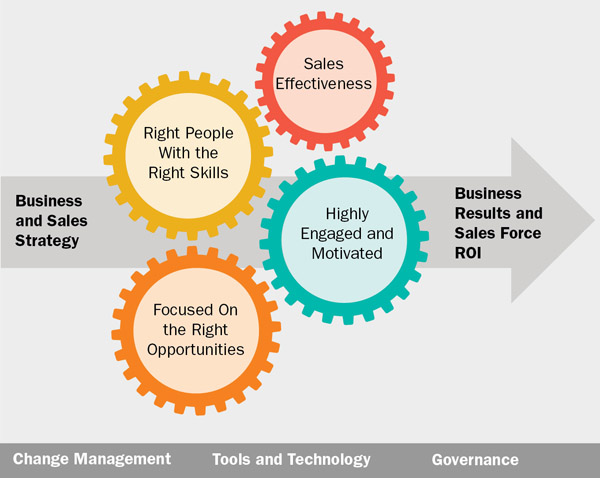
Sales leaders are always trying to balance between sales effectiveness and sales productivity. If a poll was conducted what would a CEO prefer, a productive sales force or an effective sales force? In my experience the most successful sales leaders and people care little about sales productivity.Anyone with even a few years experience in sales management will know that real sales people move to a different beat. They are a different animal, and not just because some of them like fast cars, expensive shirts or the latest Smartphone, no, the reality is real successful sales professionals are more goal focused than the average sales person. In fact the most successful sales people will constantly work more than 40 hours a week to make a sale or win a new customer to beat their target.
The measure of productivity is “the output of a worker divided by the time is required to achieve the output “, while a nice metric in sales it is not that really applicable in most sales organisations. I argue that sales people or a sales force cannot be measured in the same way as a factory worker, software developer or accountant.
Let me explain further, if for example, the IT department bring in a new system that reduces software coding time by 20% it takes a developer to code then it is reasonable to expect that the developer will produce an extra 20% more lines of code and the software teams output might go up proportionately.
When it comes to sales, when a tool is introduced that should save a sales person a few hours a week or measured as % of their working week – then it could be reasonable to think that they should be able to increase their sales by ten or twenty percent. But that is just not the case as has been proven by the mass adoption of CRM systems as real sales productivity has not improved.
Freeing Up Sales Peoples Time Does Not Increase Sales
sales-effectiveness
You see, unlike the IT and coder example if a company introduces a solution to help sales professionals do the dreaded monthly expense reports faster, what do you reckon the typical sales person will do with the extra time the business has saved him or her?
A poll of ten senior sales leaders I know gave the following quotes in reply to the above scenario – they will takes longer lunches – play more golf – spend more time at home – relax a little more. None mentioned they believed the sales force would improve productivity.
The reality is that the successful goal focused sales person is already working as many hours as it takes to nail or over achieve their targets. Saving them time simply makes them more “productive” as in they achieve the same sales output but in fewer hours. In management speak, the sales professional’s time spent working is flexible, meaning it is adjusted by the very productivity measures or tool companies have introduced to increase productivity. A zero sum result.
This is an excerpt from a Bitter Business article on sales at Sales Effectiveness is better than Sales Productivity – The Bitter Business

Friday, 6 March 2015

Sales Techniques – The Bitter Business

Every sales professional should have a reference library on effective selling techniques. There are lots of sales trainers who dispel “sales wisdom” which in reality does not help the sales person improve their sales close rates. Gathered from sales interviews and insights from sales leaders here are some really effective selling techniques that have been proven to work. Ten sales technique tips that might help improve sales performance.
sales-person
For the full article on sales techniques, please visit The Bitter Business blog at Sales Techniques – The Bitter Business